

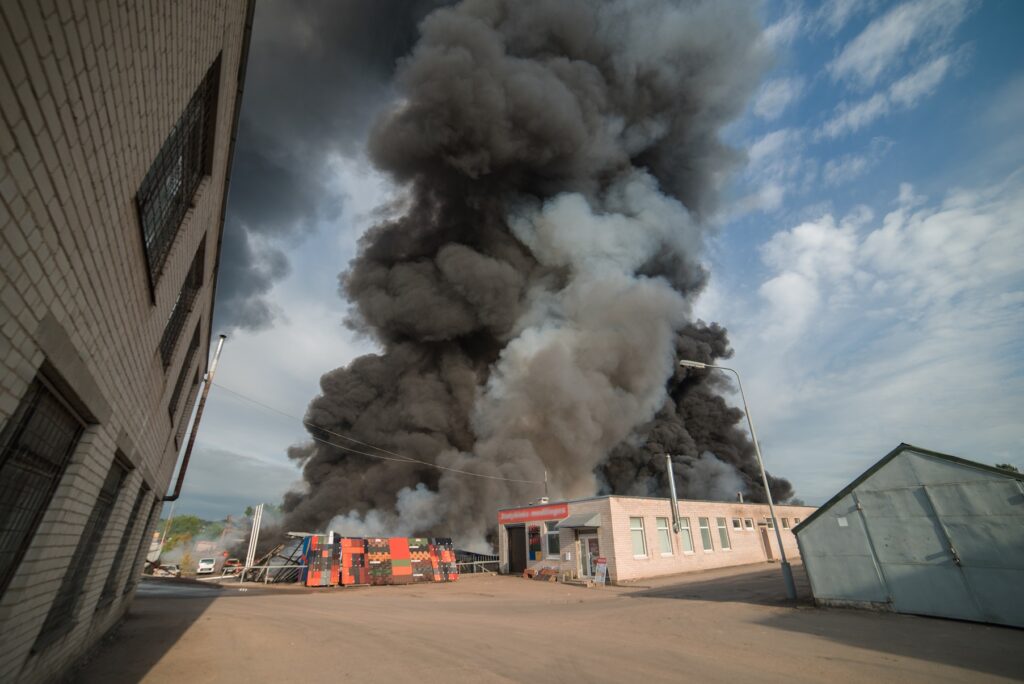
Combustible dust explosions are deadly and can devastation a workplace. While invisible to the human eye, combustible dust is a by-product of raw, flammable materials, such as wood, light metals, various chemicals and much more.
We’ve put together this article on how you can ensure safety measures are put into place to prevent any fatalities caused by dust explosions within the workplace.
What Is a Combustible Dust Explosion?
A combustible dust explosion results from a high amount of dust particles rapidly combusting inside an enclosed space. When these raw particles (derived from wood or chemicals) mix with oxygen, they will ignite if they are in close contact with an ignition source such as a spark or ember, causing a high-pressure airwave.
This airwave will create an explosion that interacts with other dust particles, which may be inside machinery or elsewhere in the workplace. Once the airwaves and the dust particles are in contact, this will cause a bigger explosion, causing devastation to machinery and human life.
How Can I Prevent a Combustible Dust Explosion with ATEX?
Maintaining the build up and spread of combustible dust within a workplace is hugely important, especially when machinery and employees are present.
We’ve listed some bullet points below to help guide you, ensure you have the correct measures in place, and inform you of ATEX-approved HVAC equipment engineered to perform in the toughest environments.
- Thorough cleaning of the workplace is of the utmost importance, as no dust means no possible hazards or explosions. Hard to reach places or areas not visible to the eye can usually have the greatest dust build up, so these areas may need to be checked regularly.
- Workplace areas should be well-lit with ATEX-approved lighting to ensure that build ups of dust are not missed.
- ATEX-approved air conditioning is specially designed to prevent materials or equipment from overheating or being affected by cold temperatures. These products are explosion safe and help to clear the air free from dust particles.
- Installing a safe dust collector — preferably outside — ensures dust is captured, preventing it from spreading to other work areas.
- Training your employees or contractors helps them understand where dust explosions might occur, how to prevent them, and what to do in an emergency.
- Remove or reduce any ignition sources within the workplace that may ignite combustible dust. Cigarettes, open flames (welding, matches, etc.) or hot surfaces (hot bearings, heaters, etc.) are the main common causes of a dust explosion.
- Barriers or walls help to prevent dust from spreading to other areas.

Taking these steps will ensure the risks of a dust explosion reduce significantly, helping to keep you and your staff safe within the workplace.
Since 2015, ATEX Online has supplied ATEX-certified products, equipment, tools and accessories for a wide range of industries — including those in the oil, gas, mining and chemical sectors — working with established partners offering only the best options on the market.
Want to learn more about how we can ensure the safety of your workplace? Get in touch with us today and we’ll supply all the information you need.